Rubber Lining
Rubber lining for tanks, vessels, pipes and material handling equipment, protecting steel against corrosion, abrasion and impact.
Protection against corrosion and abrasion
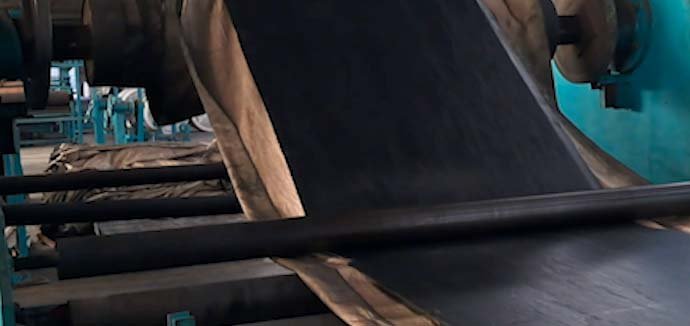
Rubber lining is one of our original product lines, produced in Surabaya since 1920. A layer of rubber is bonded to the steel surface of tanks, vessels, pipes and equipment to protect it from chemical attack, abrasion and impact, extending the service life of the asset.
Lining can be applied in our workshop or on site, on new fabrication as well as on existing equipment that needs re-lining.
Typical equipment
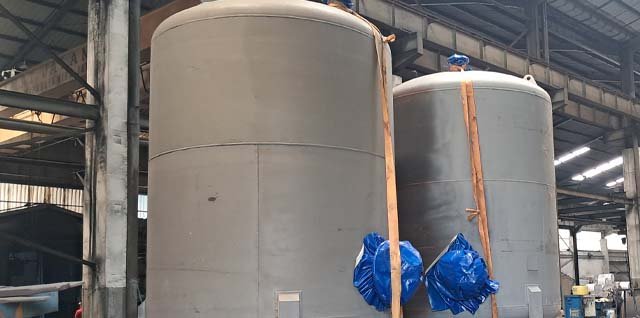
- Storage and process tanks, reaction vessels, scrubbers
- Pipes, fittings, valves and pump housings
- Chutes, hoppers, launders and transfer points
- Agitators, drums, trommels and mill components
Lining types
The compound and construction are selected according to the medium, concentration, temperature and mechanical load of the application.
Chemical resistant
Soft or hard rubber lining for acids, alkalis, brine and process chemicals in chemical, fertilizer and water treatment plants.
Abrasion resistant
High resilience natural rubber lining for slurry, ore, coal and cement handling in chutes, hoppers and pipes.
Heat and weather resistant
Synthetic compounds for elevated temperature, ozone and outdoor exposure, including FGD and power plant service.
Vulcanized or cold bonded
Autoclave or ambient cured lining in the workshop, and cold bonded lining for large equipment on site.
Application process
Every lining job follows a controlled sequence to ensure full adhesion and a pinhole-free surface.
Surface preparation
Abrasive blasting of the steel surface to remove rust and scale and create the anchor profile.
Bonding
Primer and adhesive system applied, then the calendered rubber sheet is laid and rolled to remove trapped air.
Curing
Vulcanization in autoclave, by steam or at ambient temperature depending on the compound and the size of the equipment.
Inspection
Hardness, thickness, adhesion and high-voltage spark testing before the equipment is released.
Need a specification or a quotation?
Tell us your application and our engineering team will recommend the right construction.